ماء وحياة

The Right Guidance Series - Kindle books

Anyone working in the field of apologetics, particularly Christian-Islamic comparative religion, will notice that arguments against Christianity brought forward by Muslims are similar and have a common source from the previous century.
The Roots of struggle
In the 19th century, with the encouragement of the British colonial rulers, Christian missionaries had begun evangelizing in India, and had been having some success in converting Muslims in northern India. Among them was a Swiss/German missionary named Karl Gottlieb Pfander. In 1829, Pfander wrote a book titled Mizan ul-Haqq (Balance of Truth), which upheld the authority of the Christian Bible over the Muslim Qur’an.
The book was so effective that Muslim leaders felt they had to answer, and they challenged Pfander to a public debate in Agra, northern India, in 1854. The main Muslim debater, Rahmat Allah Kairanwi, had discovered the writings of 19th-century liberal German theologians and academics, who were arguing that the Bible had been composed of other documents, had been changed over the years and was not historically accurate. He used these writings very effectively in the debate, particularly because Pfander had left Europe before these theologians’ books had been published and was not familiar with them. Kairanwi published his materials from the debate as Izhar ul-Haqq (Truth Revealed) in 1864 in Arabic.
Izhar ul-Haqq, became a very influential book and is still very widely used by Muslims to discredit Christianity. In fact, it marked a turning point for the Muslim understanding of Christianity. Instead of believing that the Christian Bible contained some distortions, as Muslims had always said, they now believed that the Christian Bible was totally corrupted and unreliable.
The Right Guidance (Al-Hidaya)
In 1899, the evangelist Mikhail Abdel Sayed Shehata published the first part of the series Al-Hidayah (The Right Guidance). In 1900, the second part was published, followed by the third part in 1901 and the fourth and final part in 1902, with the help of the director of the American Mission, Dr. Samuel Zwemer, who undertook to publish the series..
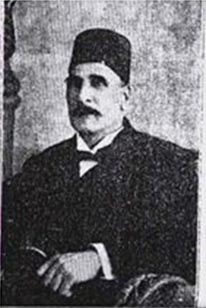
Mikhāʾīl ʿAbd al-Sayyidwas born into a strong Christian family in 1860.
Following his great passion for science and knowledge, Mikhāʾīl entered Al-Azhar University under the name Ibrāhīm ʿAbd al-Sayyid, pretending that he was a Muslim. In order to master Arabic and the Islamic sciences, he followed lessons in jurisprudence and language given by the Azharite imams and scholars every evening. He remained undetected for about three, perhaps even five years, before his religion was revealed by chance. He was arrested by the shaykhs and had to endure extensive beatings. But Shaykh Muḥammād ʿAbduh (1849-1905), the famous Muslim reformer, saved him and gave him permission to follow lectures without any further harassment. During the years he spent in Al-Azhar, Mikhāʾīl began to compose his four-volume Al-hidāya (The Right guidance’), which took him from 1898 to 1902, a period during which he left his home and went into seclusion.
After this long conflict, which lasted more than 150 years, it is clear that the West is still unaware of the existence of the “The Right Guidance” series in response to the book “Truth Revealed” even among specialists in Islamic defense and studies. The book “The Right Guidance” is one of the most powerful books that has appeared in defense of Christianity against Islamic allegations and doubts, and one of the most powerful books that has attacked the Qur’an and Islamic doctrine throughout history.
It is sad to read this paragraph from specialized pastors and theology professors:
“No systematic Christian response to Izhar ul-Haqq (Truth Revealed) has ever been published—until now. A Gentle Answer is intended as a textbook for Christians anywhere in the world who encounter arguments drawn from the 150-year-old Muslim book.”
It is clear from the date of publication of Al-Hidayah (The right Guidance) that it predates the discovery of the Dead Sea Scrolls, and those who wrote that there is no response to Izhar ul-Haqq (Truth Revealed) are men of God and defenders, but their information on this matter is completely inaccurate!
Al-hidāya was first published in Cairo by the American missionaries in a series of four volumes between 1898 and 1902.and has been reprinted several times.
The series was published again by Dr. Menes Abdul-Nour in a revised, toned-down edition, and more organized form in 1987 in Germany by Call Of Hope Foundation.
The English translation of the revised, toned-down edition was published in 1991.
***
After all this, I feel that translating the original series of “The Right Guidance” books is an urgent and imperative necessity.
***
This series is regarded as a comprehensive guide and a long-standing reference for those engaged in the study of comparative religions. It is noteworthy for its exhaustive examination of Islam, characterized by complete impartiality, objectivity, and honesty. We intend to publish “The Right Guidance” series in 6 parts:
Part 1: The sins and infallibility of the prophets
Part 2: The Reliability of the Scriptures
Part 3: False Allegations against the Old Testament
Part 4: False Allegations against the New Testament
Part 5: The Errors of The Quran
Part 6: The Quran from a Christian point of View
Samuel Zwemer said: “reply to Moslem attacks on Christianity; especially to “that Satanic book”, Izhar ul-Haqq’ as a ‘mine of material for controversy and reply to attacks’, but classified it as ‘not for all Moslems” (‘Arabic controversial literature’, p. 736)